

 English
  Polski

When major seismic events strike vulnerable regions, the global construction community receives an urgent reminder of a vital truth: we cannot stop the Earth from moving, but we can engineer our structures to withstand it.
For structural engineers, architects, and asset managers, designing for seismic activity isn’t just a matter of regulatory compliance – it is a critical public safety responsibility. In seismic design, the primary goal of structural retrofitting isn’t necessarily to preserve a building indefinitely. Instead, it is to buy time. It is about preventing sudden, catastrophic failure so that occupants have those vital, life-saving minutes they need to safely evacuate.
To achieve this level of life safety, we must fundamentally rethink how traditional materials behave under lateral and dynamic forces.
The Fatal Flaw of Unreinforced Masonry
Historically, unreinforced masonry (URM) has been the default building material for decades across the globe. While brick and stone are exceptional at handling compression (vertical weight loads), they are notoriously poor at handling tension and shear forces.
URM is incredibly rigid. When the ground begins to move, seismic energy travels upward through the foundations and into the walls. Lacking internal elasticity, unreinforced masonry cannot absorb this energy. Instead, it cracks, shears, and collapses almost instantly.
The dangerous failure point often occurs out-of-plane. As the walls flex back and forth under the cyclic demands of an earthquake, they pull away from floor diaphragms and roof structures, resulting in total building collapse with little to no warning. True structural resilience relies on changing this brittle behavior into something ductile.
Understanding the Power of Ductility
Ductility is the ability of a structure to deform, bend, and safely absorb energy without experiencing total structural failure. It is the literal opposite of brittleness. If a building can bend without breaking, it can keep its structural integrity intact while the earth moves beneath it.
By retrofitting historically vulnerable masonry with flexible, high-tensile reinforcement, we can dramatically increase out-of-plane capacity, keeping walls integrated when it matters most. This is exactly where the engineering behind advanced helical systems shifts the paradigm.
How Bar Flex Transforms Masonry Behaviour
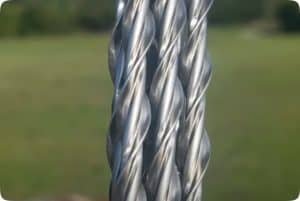
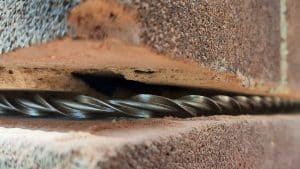
Target Fixings engineered Bar Flex specifically to bridge the gap between structural rigidity and necessary seismic flexibility. It isn’t a standard, rigid steel rebar; it is a specialized, helical-shaped reinforcement cold-rolled from high-grade 304 austenitic stainless steel wire.
During manufacturing, the bar undergoes a unique free-twisting process that work-hardens the external fins while leaving the internal core relatively soft. This creates a highly complex internal stress state: the outer fins are held in tension, while the soft core rests in compression. This process effectively doubles the tensile strength of the base material.
When embedded into a masonry wall using Bond Flex cementitious grout, Bar Flex completely changes how the wall handles seismic energy:
-
Superior Mechanical Interlock: The distinct helical fins create a continuous, high-performance bond within the mortar joints, completely outperforming standard smooth or ribbed wire.
-
The “Coiled Spring” Effect: When subjected to dynamic, cyclical stress within its elastic limit, Bar Flex acts similarly to a coiled spring. It allows the masonry to smoothly transition between the elastic stage and yielding without reaching a sudden failure point.
-
Load Redistribution: Instead of allowing a single, massive crack to split a masonry pier, the continuous helical bar distributes the kinetic energy across the entire structural member, generating microscopic, non-fatal cracks instead of a singular macro-fissure.
Independent testing, including joint research with major UK universities, has subjected Bar Flex to rigorous cyclic displacement reversals designed to replicate real-world seismic environments. The data demonstrates substantial increases in ductility—with structural wall performance factors (q-factors) exceeding 4.0 – while keeping the visual aesthetics of historic facades completely intact.
| Bar Flex | Trek (kN) | Afschuiving (kN) | Doorsnede (mm²) |
|---|---|---|---|
| 6 mm | 9.75 | 8.1 | > 8.2 |
| 8 mm | 11.67 | 9.2 | > 11.2 |
| 10 mm | 14.51 | 10.5 | > 14.2 |
Earthquake information
The table below shows the true extent that earthquakes destruction can cause. The needless loss of life makes for hard reading. Structural reinforcement to a property or structure may not stop it from collapsing as if the magnitude is high enough on the Richter Scale then as nature has shown countless times before, it will win. However, the time that reinforcement could allow in that terrible situation, time to escape, would be a major positive to the horrendous death tolls you see below.
| Death Toll | Magnitude | Land | Date | |
| 2010 Haiti earthquake | 160,000 | 7 | Haiti | January 12, 2010 |
| 2008 Sichuan earthquake | 87,587 | 7.9 | China | May 12, 2008 |
| 2005 Kashmir earthquake | 87,351 | 7.6 | Pakistan / India | October 8, 2005 |
| 2023 Turkey–Syria earthquakes | 62,013 | 7.8 & 7.7 | Turkey / Syria | February 6, 2023 |
| 2003 Bam earthquake | 34,000 | 6.6 | Iran | December 26, 2003 |
| 2001 Gujarat earthquake | 20,085 | 7.7 | India | January 26, 2001 |
| 2015 Nepal earthquake | 8,964 | 7.8–7.9 | Nepal | April 25, 2015 |
| 2006 Yogyakarta earthquake | 5,756 | 6.4 | Indonesia | May 26, 2006 |
| 2025 Myanmar earthquake | 5,456 | 7.7–7.9 | Myanmar / Thailand | March 28, 2025 |
| 2026 Venezuela earthquakes | 3,420 | 7.2 & 7.5 | Venezuela | June 24, 2026 |
| 2023 Al Haouz earthquake | 2,960 | 6.9 | Morocco | September 8, 2023 |
| 2010 Yushu earthquake | 2,698 | 6.9 | China | April 13, 2010 |
| 2003 Boumerdès earthquake | 2,266 | 6.8 | Algeria | May 21, 2003 |
| 2021 Haiti earthquake | 2,248 | 7.2 | Haiti | August 14, 2021 |
| 2025 Kunar earthquake | 2,217 | 6 | Afghanistan | August 31, 2025 |
| 2002 Hindu Kush earthquakes | 2,000 | 7.4 & 6.1 | Afghanistan | March 25, 2002 |
| 2023 Herat earthquakes | 1,482 | 6.3 | Afghanistan | October 7, 2023 |
| 2005 Nias–Simeulue earthquake | 1,313 | 8.6 | Indonesia | March 28, 2005 |
| June 2022 Afghanistan earthquake | 1,163 | 6.2 | Afghanistan / Pakistan | June 21, 2022 |
| 2009 Sumatra earthquakes | 1,115 | 7.6 & 6.6 | Indonesia | September 30, 2009 |
Proactive Preservation Saves Lives
Disaster mitigation must start long before the ground moves. Relying on reactive repairs after an earthquake has already caused structural movement is a losing strategy. Safeguarding human life in seismic regions requires proactive, highly engineered solutions implemented today.
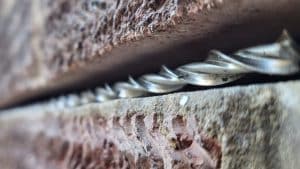
By introducing Bar Flex as a near-surface mounted reinforcement, structural engineers can structurally upgrade historical brickwork, stone arches, and solid masonry walls without altering the architectural heritage. We cannot control the unpredictable forces of nature, but with the right engineering, we can dictate how our buildings react to them.
Explore the complete engineering specifications, stress-strain limits, and academic testing data behind our seismic masonry reinforcement systems at the official Target Fixings Bar Flex Page.
 English
  Nederlands
  Polski
Comments are closed