

 English
  Polski
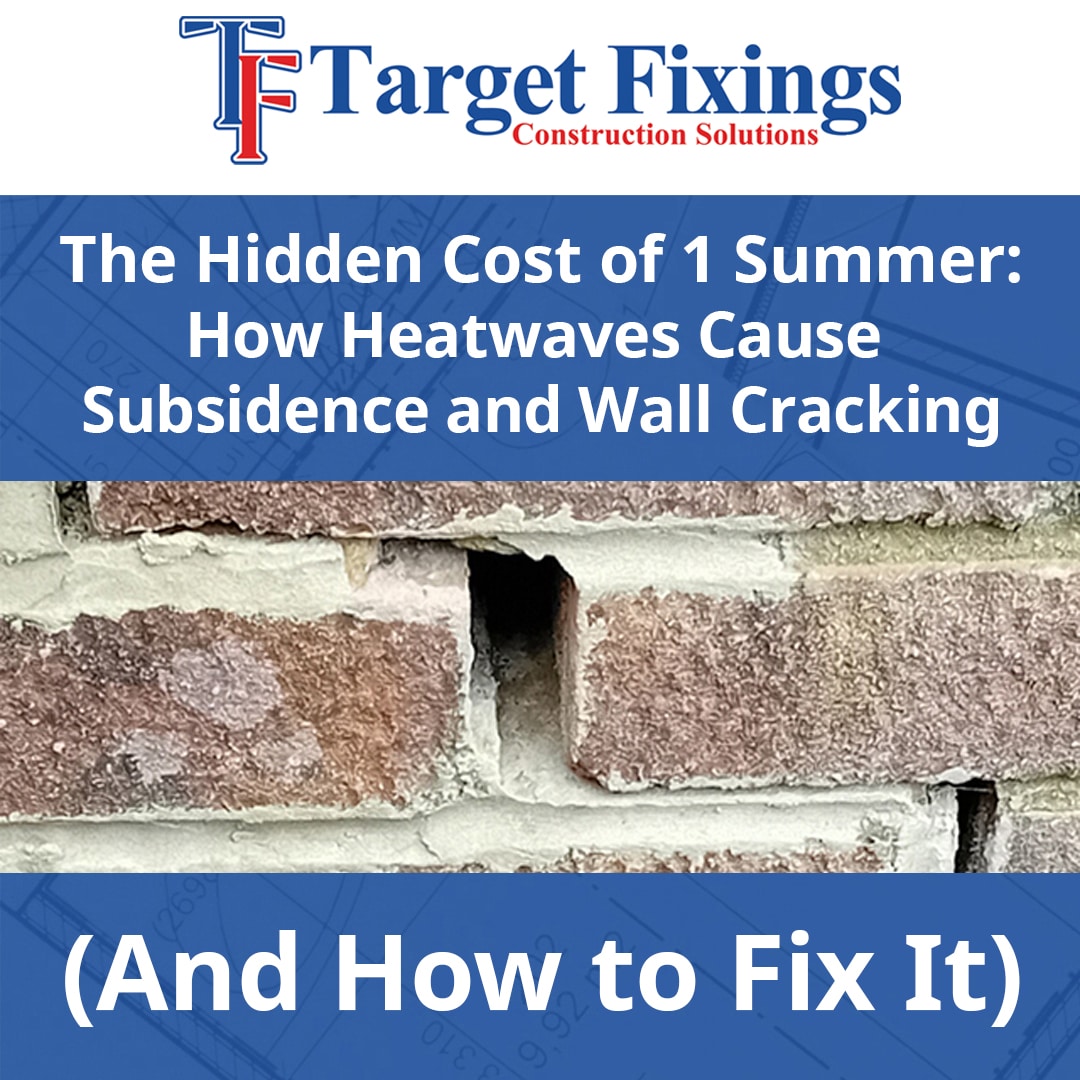
As summer temperatures reached unprecedented highs across the UK and Europe, most of us enjoyed the extended sunshine. However, prolonged dry spells and soaring temperatures bring a hidden danger to property owners. Beyond scorched lawns and hosepipe bans, extended heatwave conditions create ideal scenarios for serious structural distress – most notably verzakkingsproblemen, severe scheuren in de muur, and unpredictable masonry movement.
At Target Fixings, we see a sharp rise in structural inquiries following dry periods. Understanding why this happens and knowing how engineered masonry repair systems can restore your building’s structural integrity is crucial for any homeowner, surveyor, or structural engineer.
Why a Heatwave Triggers Structural Distress
Buildings are designed to cope with minor seasonal shifts, but extreme, persistent heat tests even the sturdiest foundations.
1. Soil Desiccation and Clay Shrinkage
The main culprit behind heatwave-induced verzakkingsproblemen is soil desiccation. Clay soils, which cover vast areas of the UK, act like giant sponges. During a prolonged heatwave, moisture evaporates rapidly from the upper soil layers, causing clay particles to shrink and contract volume. As the ground beneath a building shrinks and drops, the foundations lose their uniform support, leading to differential settlement.
2. Moisture-Seeking Tree Roots
Vegetation aggravates soil shrinkage. During hot spells, trees and large shrubs draw excessive amounts of water from deep within the ground to survive. This localised moisture extraction creates uneven ground sinking under specific areas of a house, such as bay windows or extensions.
3. Dynamic Thermal Expansion
Heat doesn’t just affect the ground; it acts directly on building materials. Extreme ambient temperatures cause masonry units (bricks, stone, and mortar) to expand significantly during the heat of the day and contract rapidly as temperatures drop at night. This cyclic stress induces differential stress, triggering structural masonry movement and leading to unsightly step-cracks along mortar lines or straight fractures directly through brickwork.
Recognizing the Signs of Movement
Catching movement early prevents minor fractures from turning into catastrophic failures. Look out for:
-
Diagonal or Stepped Cracks: Cracks wider than 3mm near windows, doors, or corners that taper down.
-
Sticking Windows and Doors: Frames becoming misaligned as the structure shifts out of square.
-
Separating Structures: Gaps appearing where extensions, bay windows, or porch walls meet the main building.
-
Internal Rippling: Wrinkling wallpaper or cracks appearing at the junction between walls and ceilings.
Engineered Remedial Solutions from Target Fixings
When a heatwave causes ground failure or thermal stress, traditional “takedown and rebuild” options are expensive, invasive, and environmentally damaging. Target Fixings manufactures and installs advanced structural repair systems designed to stabilise structures with minimal disruption.
Target Heli-Pile: Foundation Stabilisation
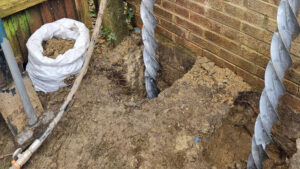
If ground shrinkage triggers true verzakkingsproblemen, the foundation must be anchored to deeper, stable ground strata. - Target Heli-Pile system is a discreet, ultra-low-vibration helical micro-piling solution. Capable of being installed in tight spaces (requiring less than 1m² of access area), Heli-Piles are driven deep past the desiccated clay zones to transfer building loads to competent ground without mass excavation.
Bar Flex & Bond Flex: High-Performance Scheurnaden
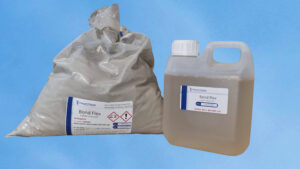
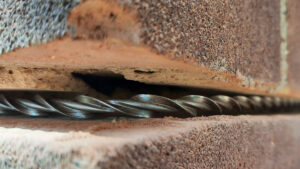
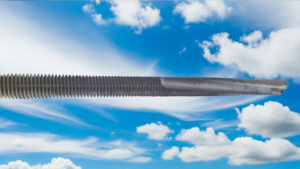
Simply filling a crack with mortar or cosmetic filler doesn’t solve structural fracture; it creates a dynamic hinge that will crack again. - Target Bar Flex system uses high-tensile, stainless-steel helical bars encapsulated into mortar joints using Bond Flex high-strength anchor grout. This creates invisible structural beams within the existing wall, stabilising the fractured masonry and redistributing structural loads across the crack while accommodating future minor movement naturally.
Dri Flex & Bow Flex: Wall Ties & Lateral Restraint
Thermal expansion during a heatwave can strain cavity wall ties or push external leaves away from internal floor joists.
-
Target Dri Flex: Precision-engineered remedial wall ties driven mechanically into masonry to reconnect cavity walls without chemical anchors or cavity bridging.
-
Target Bow Flex: Long-length lateral restraint ties installed from the exterior to secure bowing external walls directly to internal timber joists or concrete floor slabs.

Secure Your Property Against Changing Climates
As hot summers become more frequent, proactive structural maintenance is vital. If your property exhibits signs of scheuren in de muur, ground settlement, or historic masonry movement, don’t wait for the damage to escalate.
Contact the engineering specialists at Target Fixings for a non-binding specification and property assessment. Our engineered solutions provide permanent peace of mind, preserving both structural integrity and historic aesthetics.
 English
Comments are closed